Fish Migration Season
by Christina Tobitsch - Director of Education
We are in the midst of fish migration season! While some Hudson River fish tend to stay in the slightly salty estuary waters year-round, several will instead move up river or down river at certain times of year. Why do they move? Some fish prefer spawning in either freshwater, brackish water, or the ocean. Yearly they migrate to these preferred areas to spawn (lay eggs in large quantities).
Migratory fish that move between fresh and saltier waters are called diadromous. A fish that moves out to the ocean for spawning is referred to as a catadromous fish. A fish that travels from the ocean into the estuary or small freshwater tributaries is called an anadromous fish. Migration seasons take place in both spring and fall.
Here are some facts about few of our favorite fish currently on the move:
Catadromous Fish
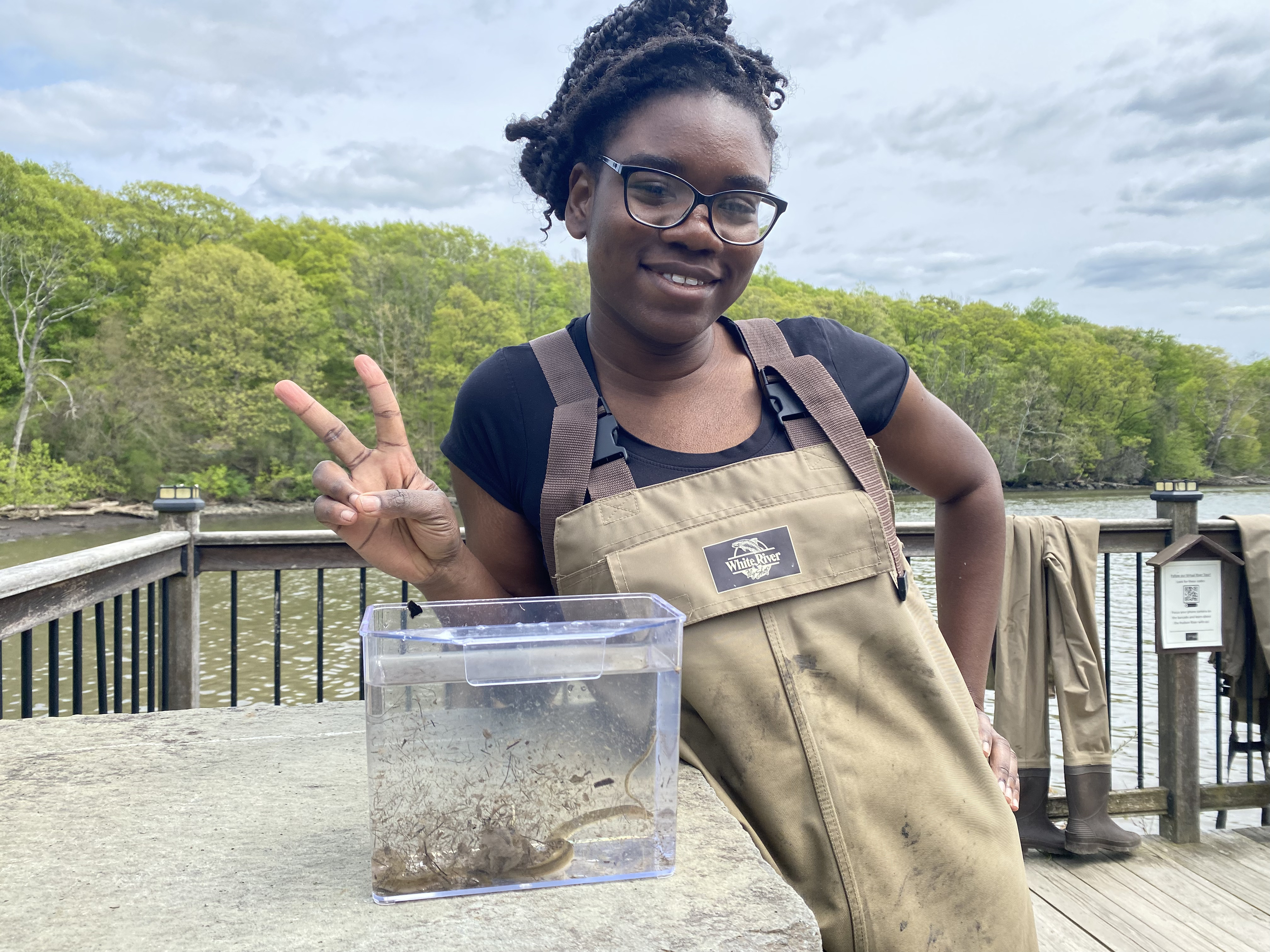
American Eel: Through our Eel Migration Study in late winter through spring, we have been closely tracking and monitoring the movement of the young glass eels that hatched in the Sargasso Sea and are making their way into the estuary to live out most of their life. In the fall, mature eels will make their way back to the Sargasso Sea to spawn. Often times fish face barriers like dams and other impasses that make migration more difficult. However, an adult eel’s slender, slimy body gives them the unique advantage of being able to come out of water on wet nights and maneuver around these barriers.
Anadromous Fish
Atlantic Sturgeon: The largest fish of the Hudson (averaging 6 - 9 feet as adults), will usually spend their adult years in the Atlantic Ocean. From May - June, they will migrate into the Hudson to spawn, making it an anadromous fish. Adults then migrate back to ocean waters immediately after, while juveniles will spend at least 2 - 6 years in the estuary before moving back to ocean waters to fully mature.
Herring: Alewife and blueback herring are commonly referred to as River Herring, however the herring family (Clupeidae) also includes American shad. All three of these herrings are anadromous fish. The “herring runs” in spring is a sight to be seen; these fish will travel together in large groups ranging from hundreds to thousands, making it easy to spot. Unlike eels or salmon, which die after spawning, adult herring will continue to spawn yearly. Adults will complete between 5 - 10 spawning cycles in their lifetime.
Striped Bass: Hailed as the official state marine fish of New York, the striped bass is another example of an anadromous fish. If you are a recreational angler along the Hudson, you are likely familiar with migration tracking maps. The NYSDEC does implement catch regulations for stripers. This helps ensure populations are not depleted of spawning females.
There are many more anadromous fish species than catadromous, and there is an important reason for this. Estuaries, like the Hudson, are considered essential nurseries and breading grounds. The shallow waters and mix of habitat structures ensure young fish are more protected and sheltered away from a high abundance of larger predators found in the open ocean. Estuaries are often nutrient-rich with an abundance of plankton and algae - essential food sources for larvae and juveniles. Along the shoreline at CURB, a salt marsh and semi - enclosed area creates calmer waters and an ideal area for many young fish and even crustaceans to safely survive and grow.
Join us for upcoming events celebrating fish migrations!
May 30, 10 AM – 12 PM:
As a part of a Hudson River-wide Fish Migration Day, CURB educators will lead a community seining program where visitors are invited to learn how to use a seine net to collect estuary organisms. Data is collected to help track trends in Hudson River biodiversity, including the movement of migrating fish!
June 20:
Join us along the Yonkers Waterfront for an extra special day, starting with Riverkeeper’s flotilla sail - a collection of boats decorated as migratory fish species will travel together up river. The afternoon continues with the annual Waterfront Summer Kickoff Festival.
Stay tuned for more details!