2026 American Eel Migration Project Sampling Update
by Jason Muller - Educator & River Ecology Specialist
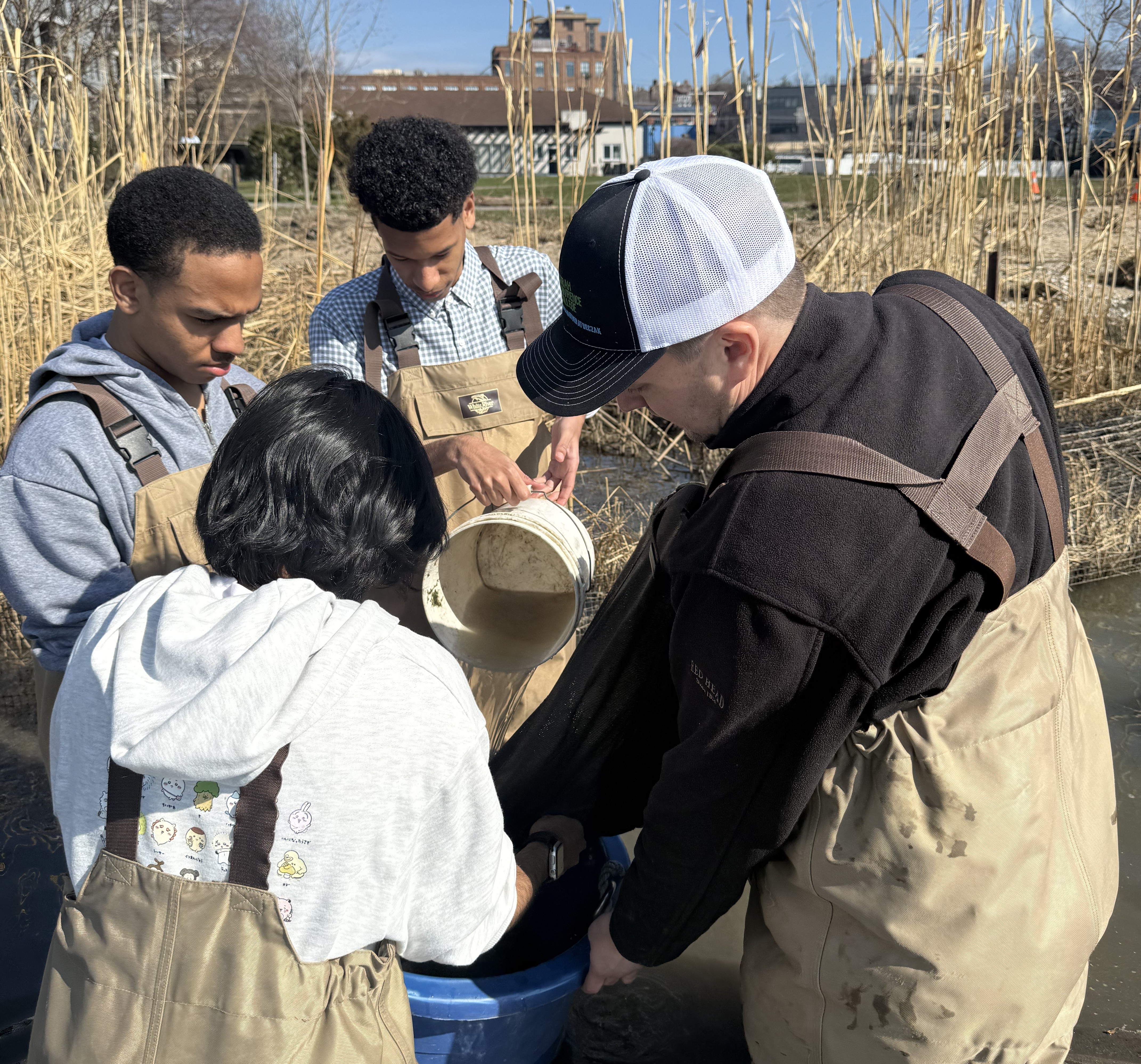
CURB’s team of staff and volunteers are currently in their 3rd month of sampling for migrating glass eels as part of the 2026 American Eel Migration Project. This study, which is organized by the NYSDEC, sees approximately 15 sites along the Hudson River watershed sampling for these 1-year-old eels. CURB is now in its 13th year of participating in this project.
This year’s season got off to a bit of a slower start than the last few years due to a much colder and snowier winter. The timing of the eel migration is dependent on water temperatures, with it being thought that glass eels generally start moving into the Hudson once the temperature nears 40F. Our first eel was caught on 3/2 this year, compared to 2/6 in 2025 and 1/31 in 2024.
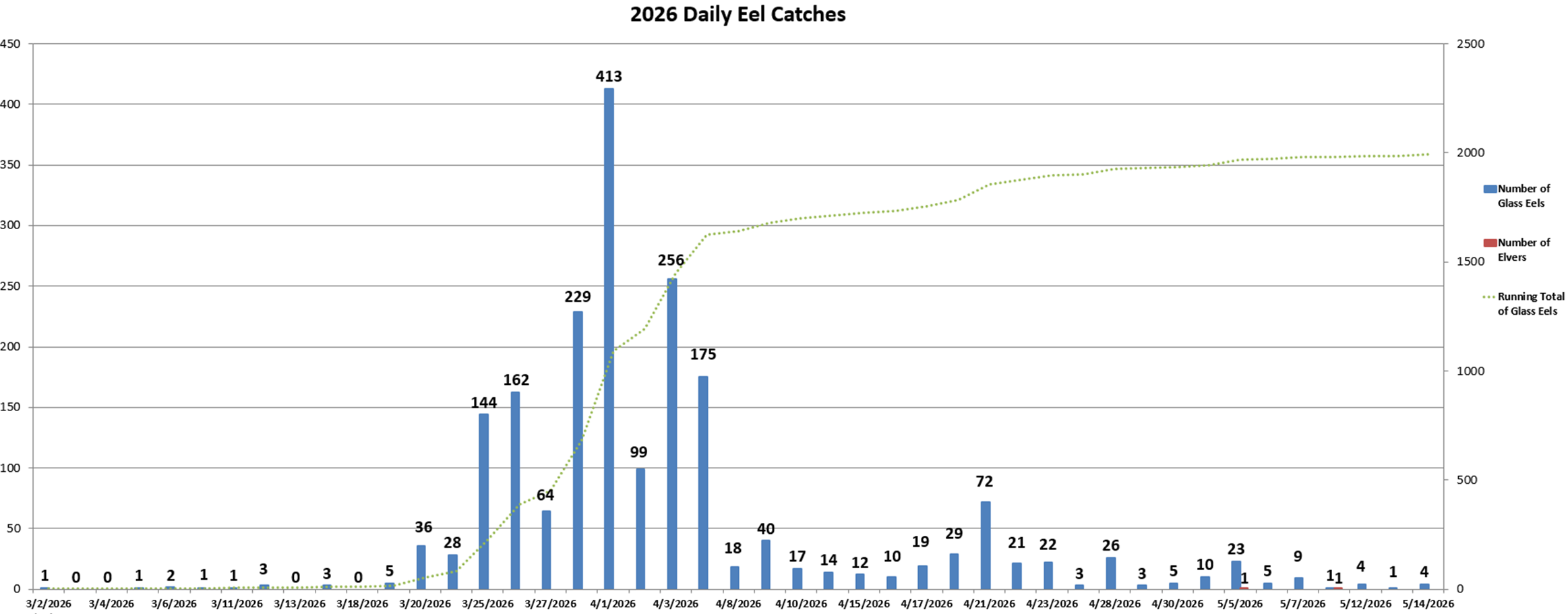
We saw relatively low eel counts for much of March, until the last week of the month when things quickly picked up. We had our highest numbers from March 25th – April 7th when a total of 1,542 glass eels were caught. After this point eel counts began to tail off, though we are still catching a few each day as of May 14th.
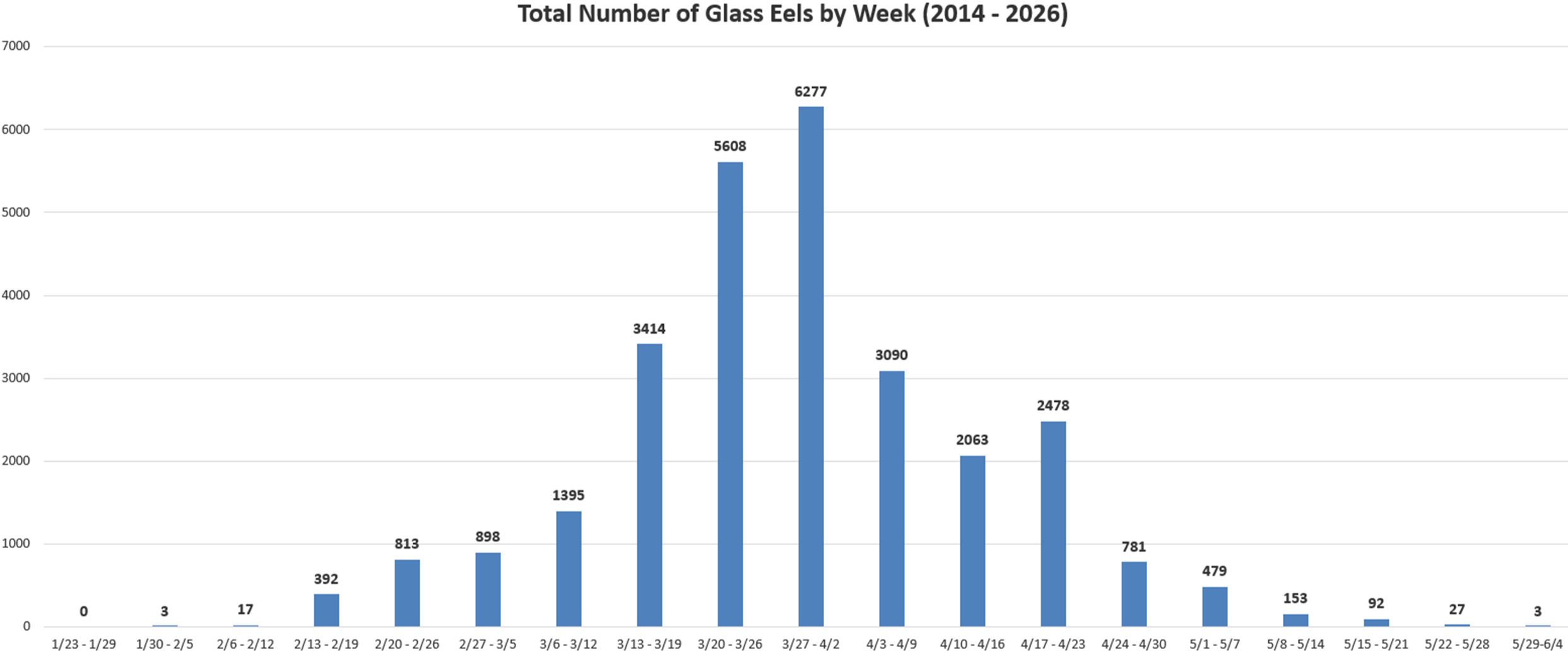
In all, we currently stand at 1,991 glass eels for the season. With a few weeks of sampling remaining, we’re likely to finish the season with around 2,000 – 2,050 glass eels. This would be slightly below our 13-year average of around 2,150. Overall, eel counts have been much higher at our site during the second half of our 13 years of sampling. From 2014 – 2020 we averaged 1,224 glass eels per year, while this number increased to 3,236 from 2021 – 2026. This has been a bit of a down year when compared to the last few years, but still much better than our early seasons.
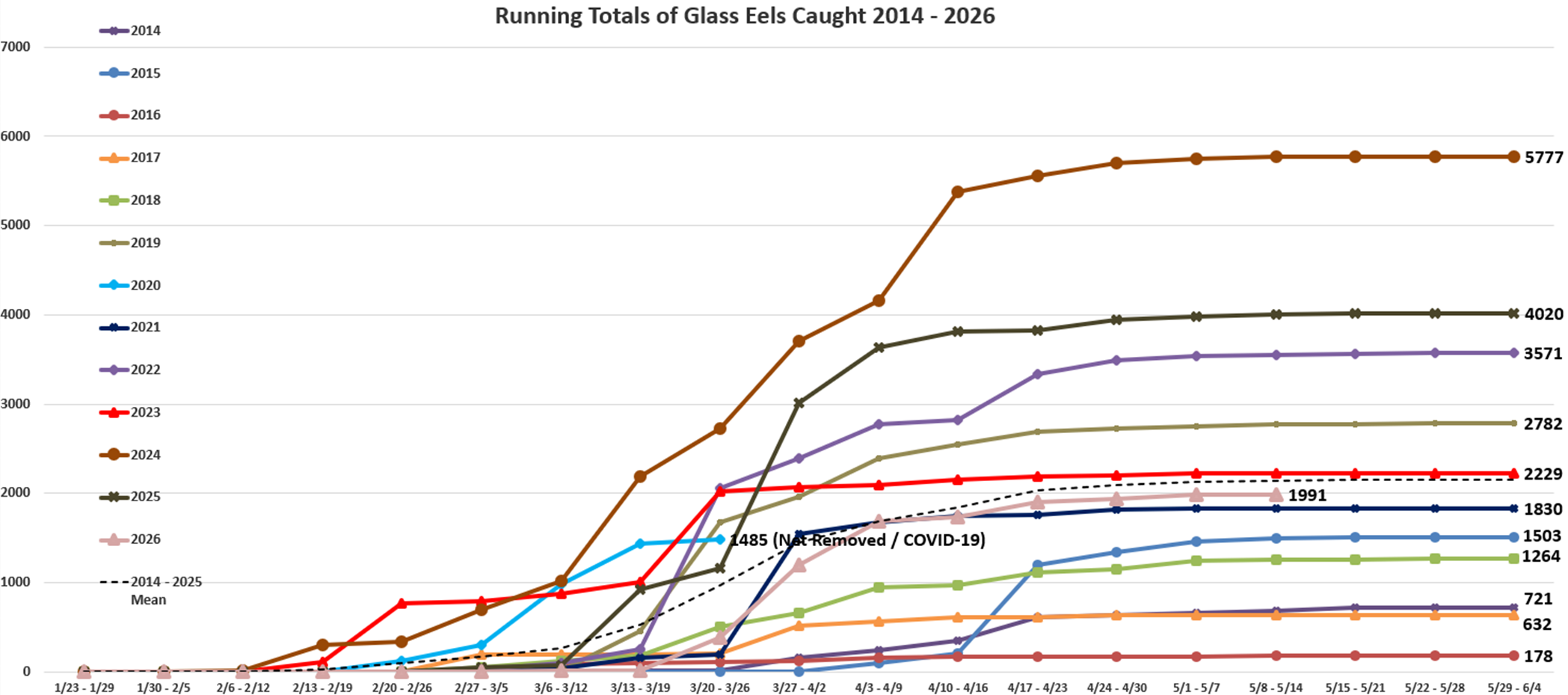
It’s also important to note that the results here in Yonkers don’t always match up to what the watershed is seeing as a whole. The best way to determine the overall success of a season is to compile the results of all 15 sites, which the DEC will be doing once the season is over. They also release a seasonal report, usually at some point in the summer which is available here. In the meantime, our live data for Yonkers may be found on our website.
Lastly, we would like to take a moment to thank all of our staff, interns, and volunteers who have braved the weather to make this a successful season of sampling!