2025 Hudson River Seining Season Data Summary
by Jason Muller - Educator & River Ecology Specialist
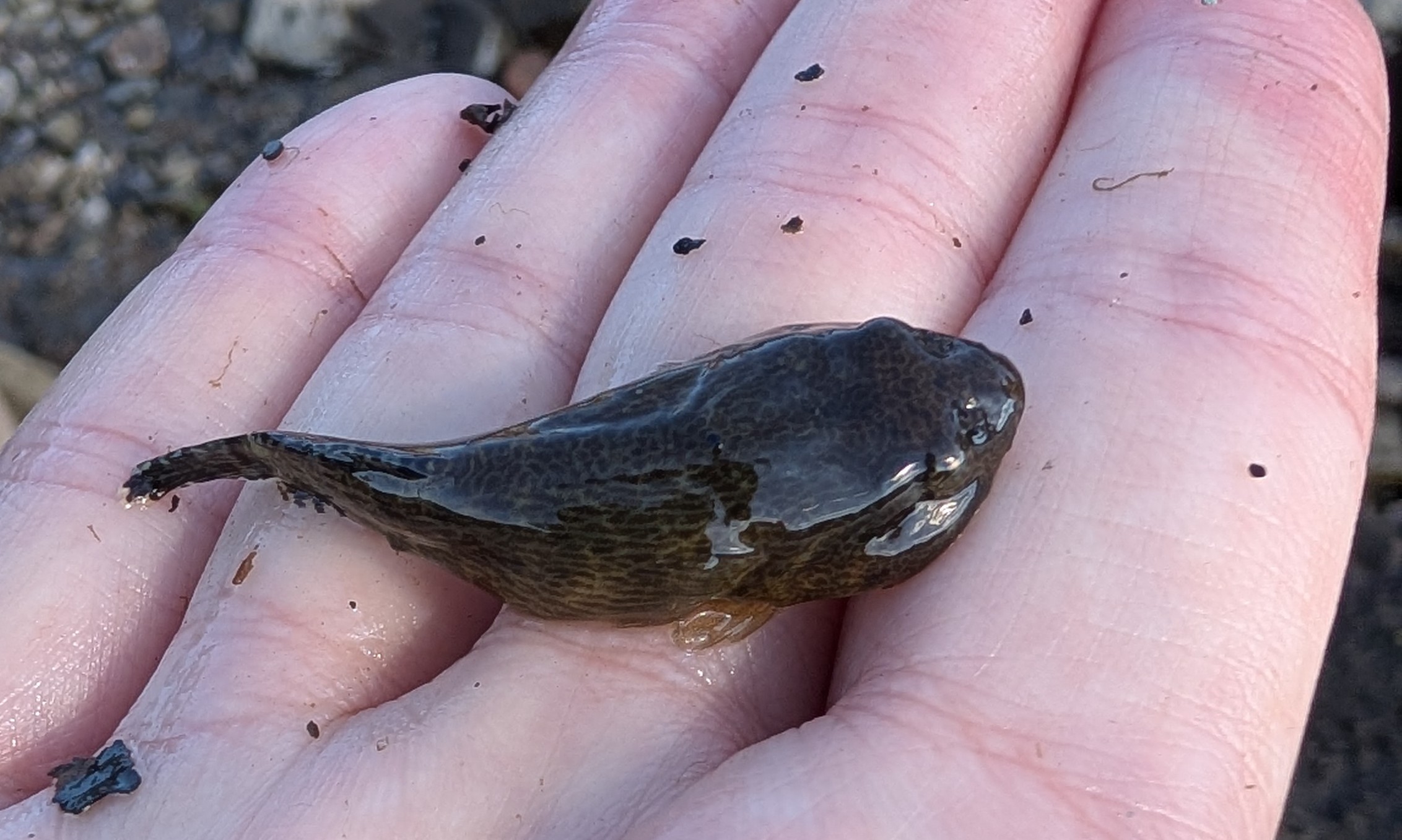
(pictured above - the first skilletfish caught at CURB)
CURB’s 2025 Hudson River seining season began on February 28th, and after 931 hauls of the seine net, wrapped up on November 19th. Seining is a method of sampling for fish using a 30ft long seine net. The fish are caught, counted, and in some cases measured, before being released back to the river. Weather and water quality data are also collected. The purpose of seining is to track the populations of various species of fish along our waterfront. School groups, volunteers, and interns joined us for 117 seining sessions during the 2025 season.
Some of the highlights of the season may be found below. As always, all of our seining data is available on our website at: https://www.centerfortheurbanriver.org/research/seining.html.
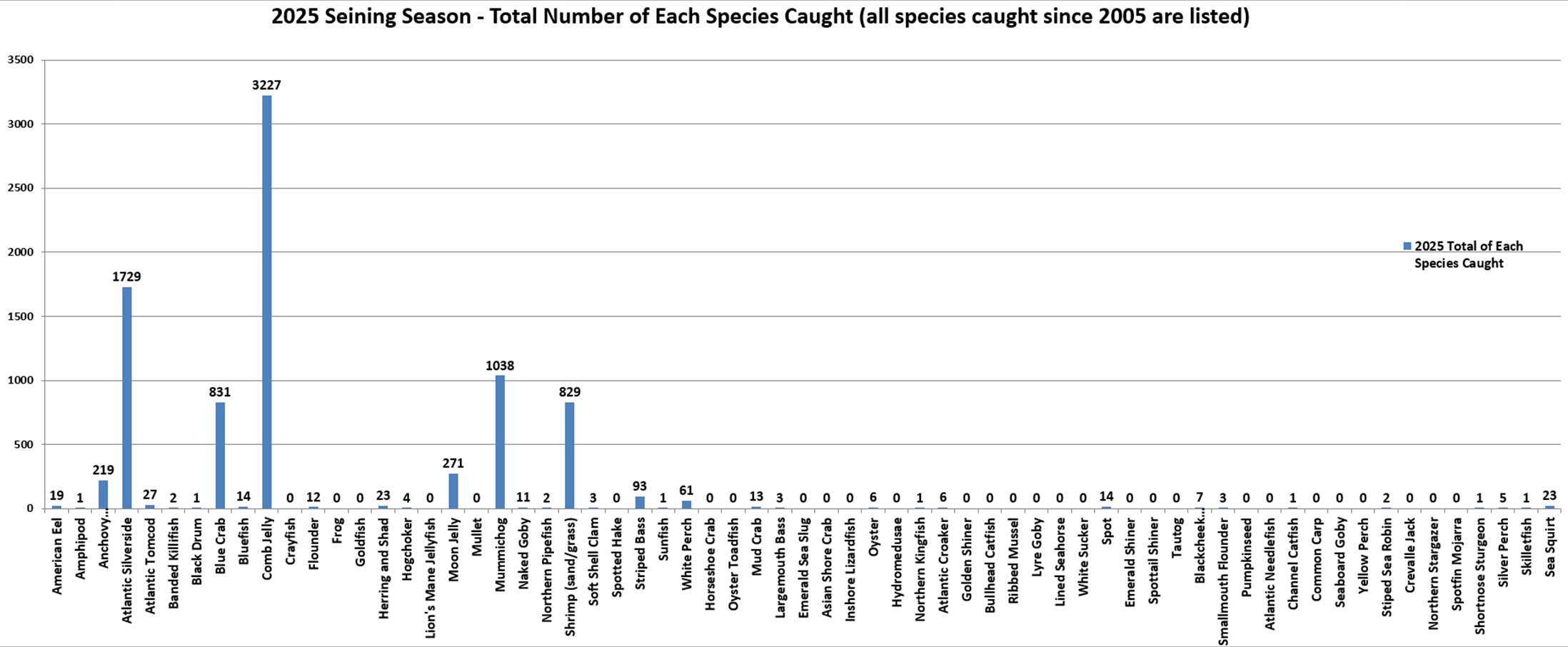
- Throughout the season we caught a total of 41 different species of animals including fish, shrimp, crabs, jellies, and sea squirts. This is the most that we have caught in a single year.
- We saw 5 new catches for our location including shortnose sturgeon, silver perch, skilletfish, sea squirt, and striped anchovy.
- Our top 10 catches were: comb jelly (3,227), Atlantic silverside (1,729), mummichog (1,038), blue crab (831), grass shrimp (709), moon jelly (271), bay anchovy (212), sand shrimp (120), striped bass (93), white perch (61).
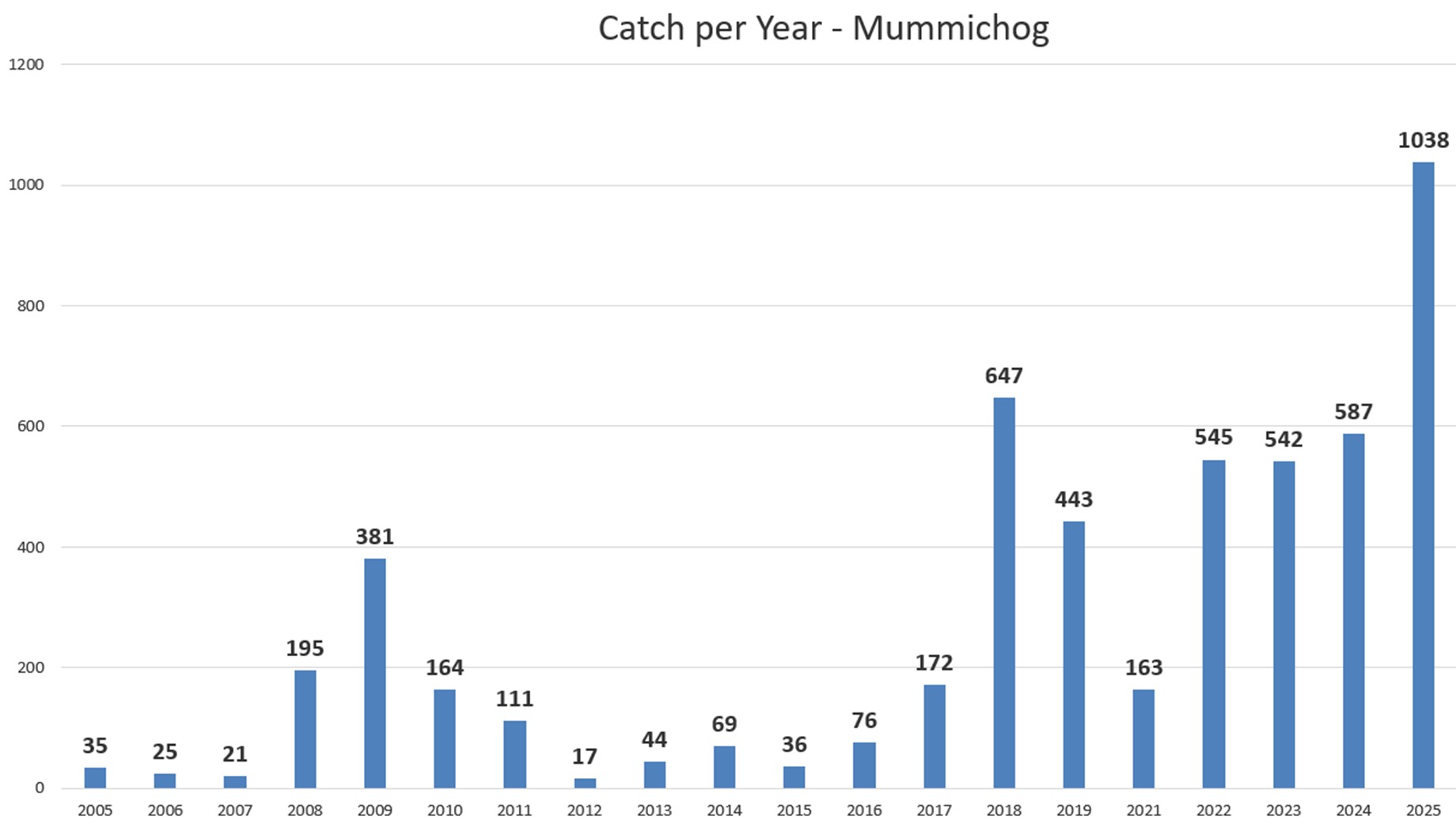
- The season produced 1,038 mummichogs, which is our highest total ever (226 yearly average). We also saw very high numbers of comb jellies (3,227 - 2nd most for a season).
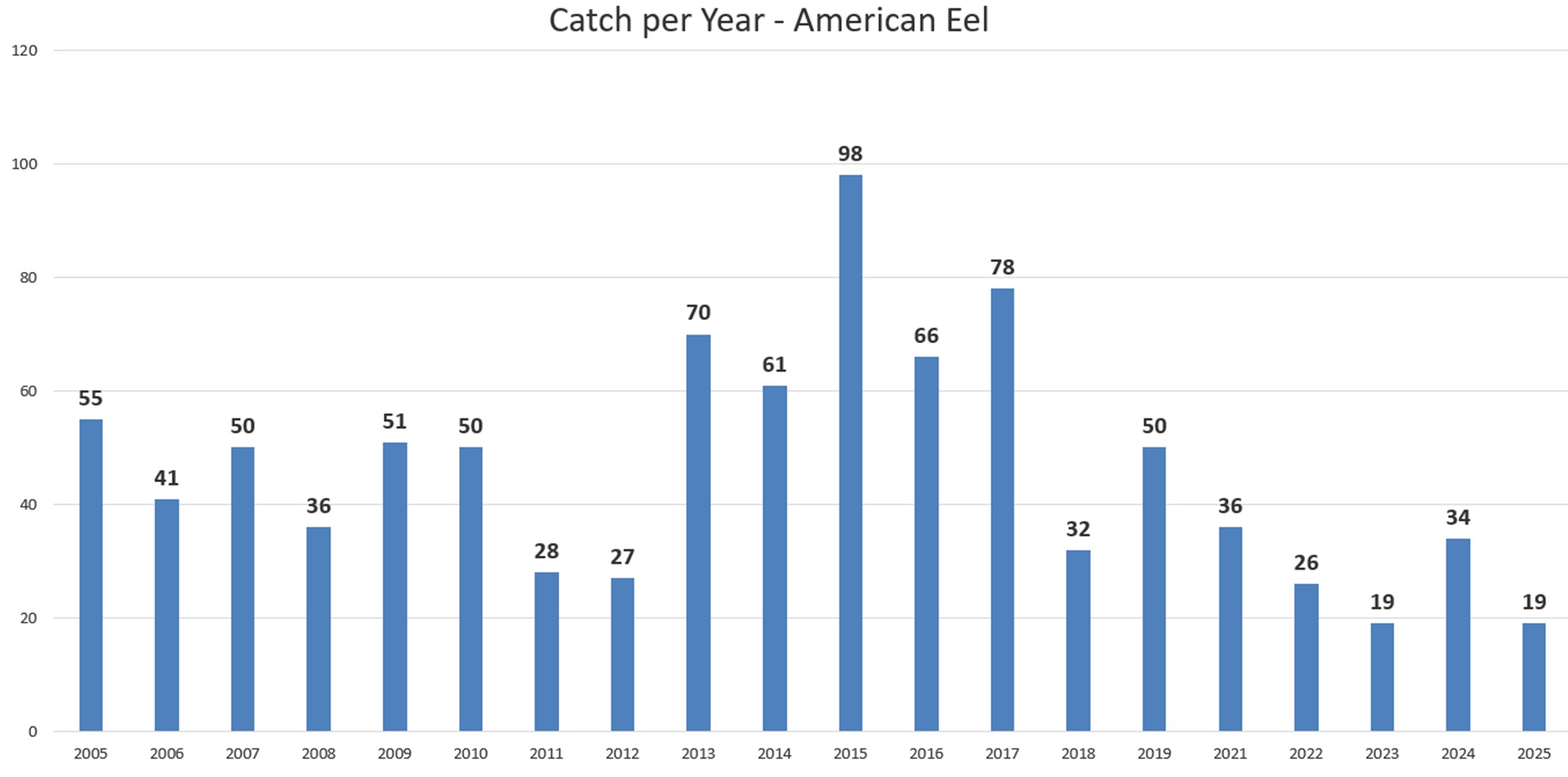
- On the other hand, we had the lowest yearly counts ever for striped bass and American eels (tied with 2023).
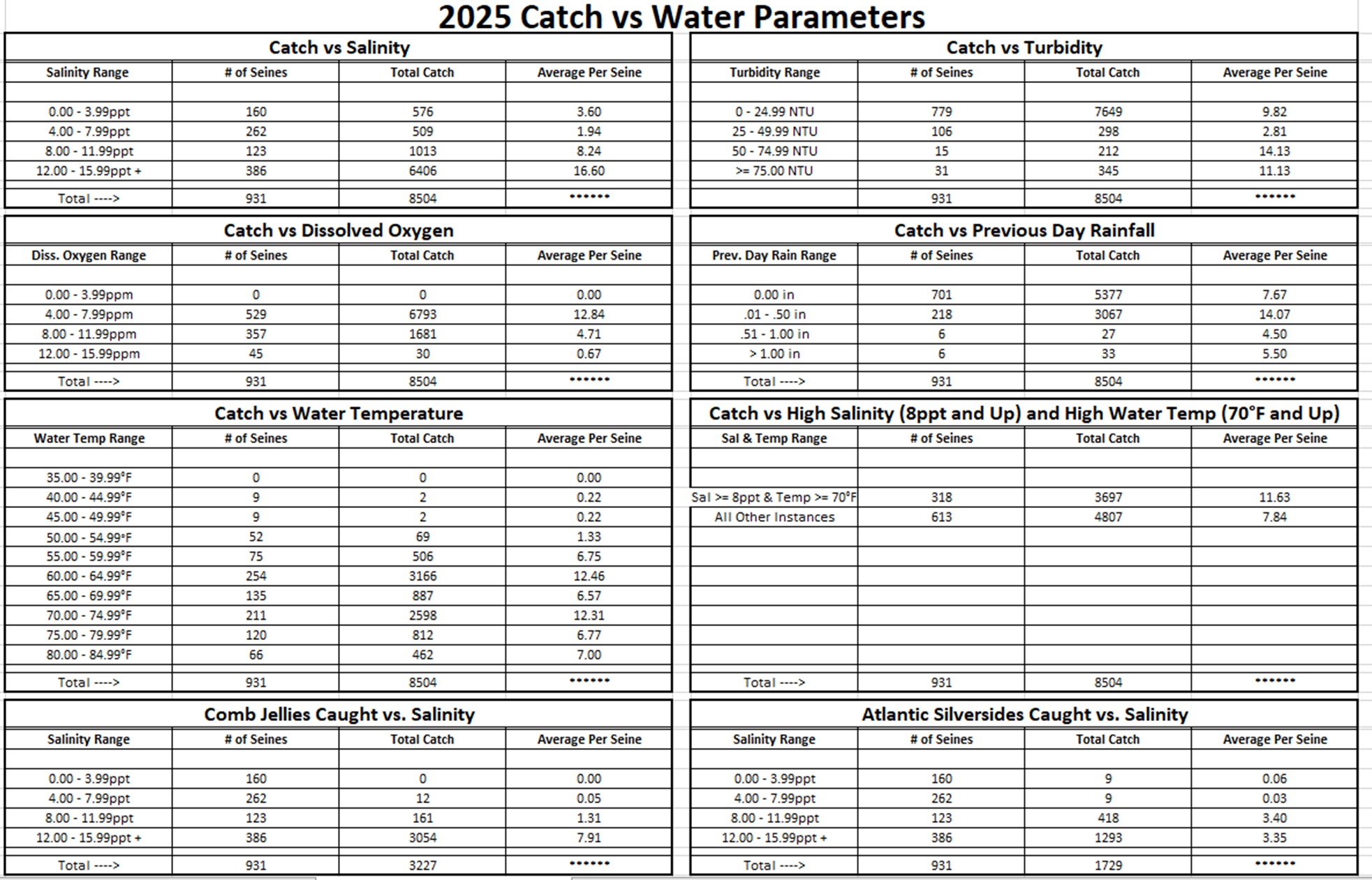
- Our overall catch of 8,504 was our 5th highest total in 20 years. The catch per haul average (total catch/number of hauls) was 9.13, ranked 7th out of 20 years.
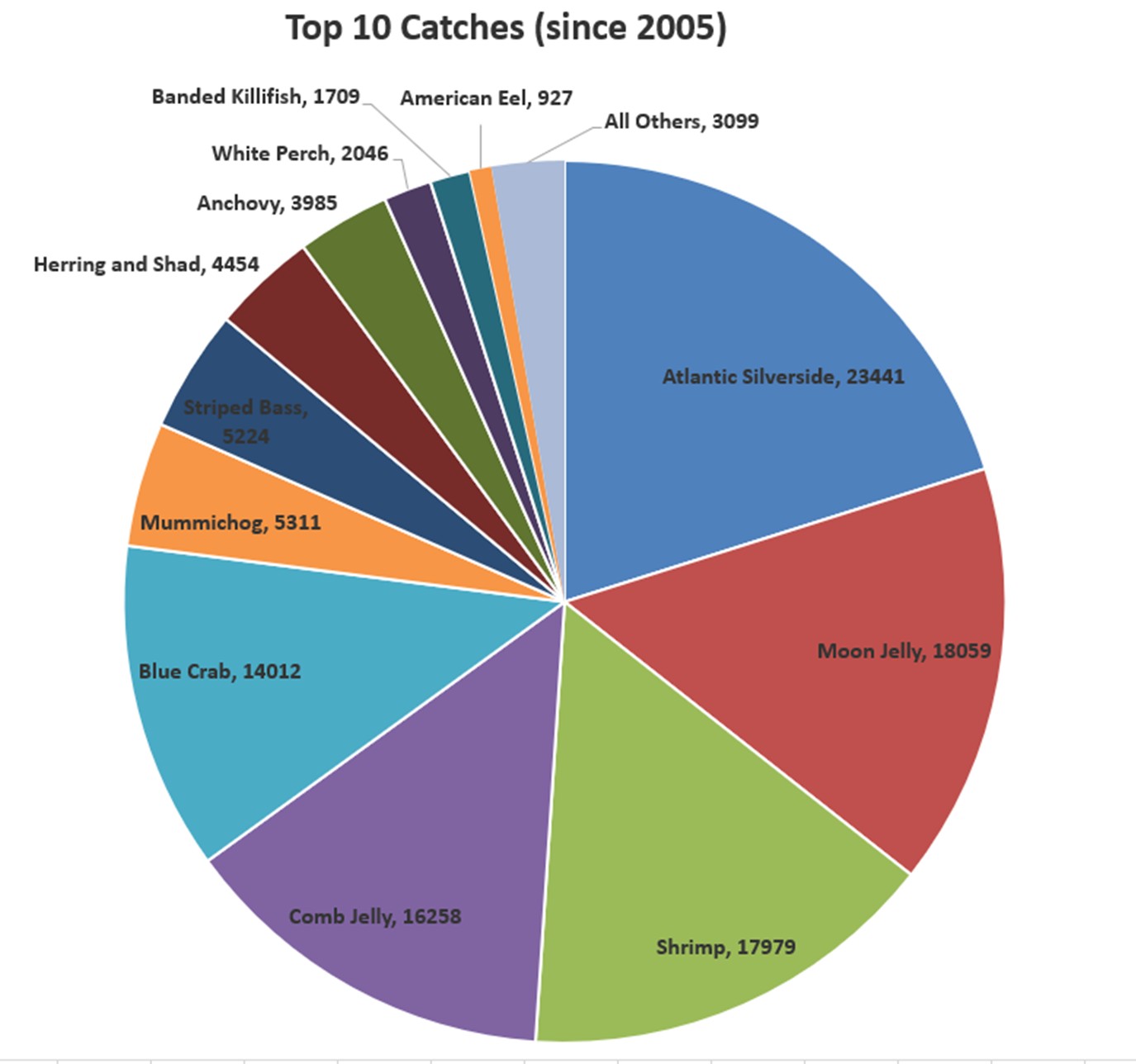
All in all, it was a solid year of seining with several new species caught. This continues the trend of the last several years in which we caught 17 species for the first time since 2022. Conversely, some of our stalwart species like striped bass, American eel, and white perch saw much reduced numbers in 2025.
What could be causing these changes to our catches? It’s hard to say, but we have been seeing warmer water temperatures in recent years, as well as big swings in salinity (salt) levels. In the last few years alone, we have alternated between periods of excessive rainfall and moderate drought conditions. Salinity levels have ranged from 0.5 – 20.0 ppt at times supporting a wider variety of species. Is this also factoring into the reduction in numbers of certain species in our area? There's not enough data to make a conclusion, but it’s something to watch for in future years.
Here are some graphs and tables from the 2025 season: